
What an epoxy flake floor system contains
Decorative flakes add color and pattern to a coating system. They change the appearance, but they do not replace preparation or determine every performance characteristic of the finished floor. The base, decorative coverage and protective finish work as a system.
Flake can be a useful choice for a garage or commercial space where a patterned surface is preferable to a plain color. It can make some everyday dirt and marks less conspicuous. That is an appearance advantage, not a reason to clean less often.
Start with the use of the floor. If it will handle vehicles, consider the garage flooring guidance. If it serves customers or staff, use the commercial flooring checklist alongside the finish selection. A flake blend cannot answer questions about loading, cleaning or reopening.
Choose flake size, color and coverage
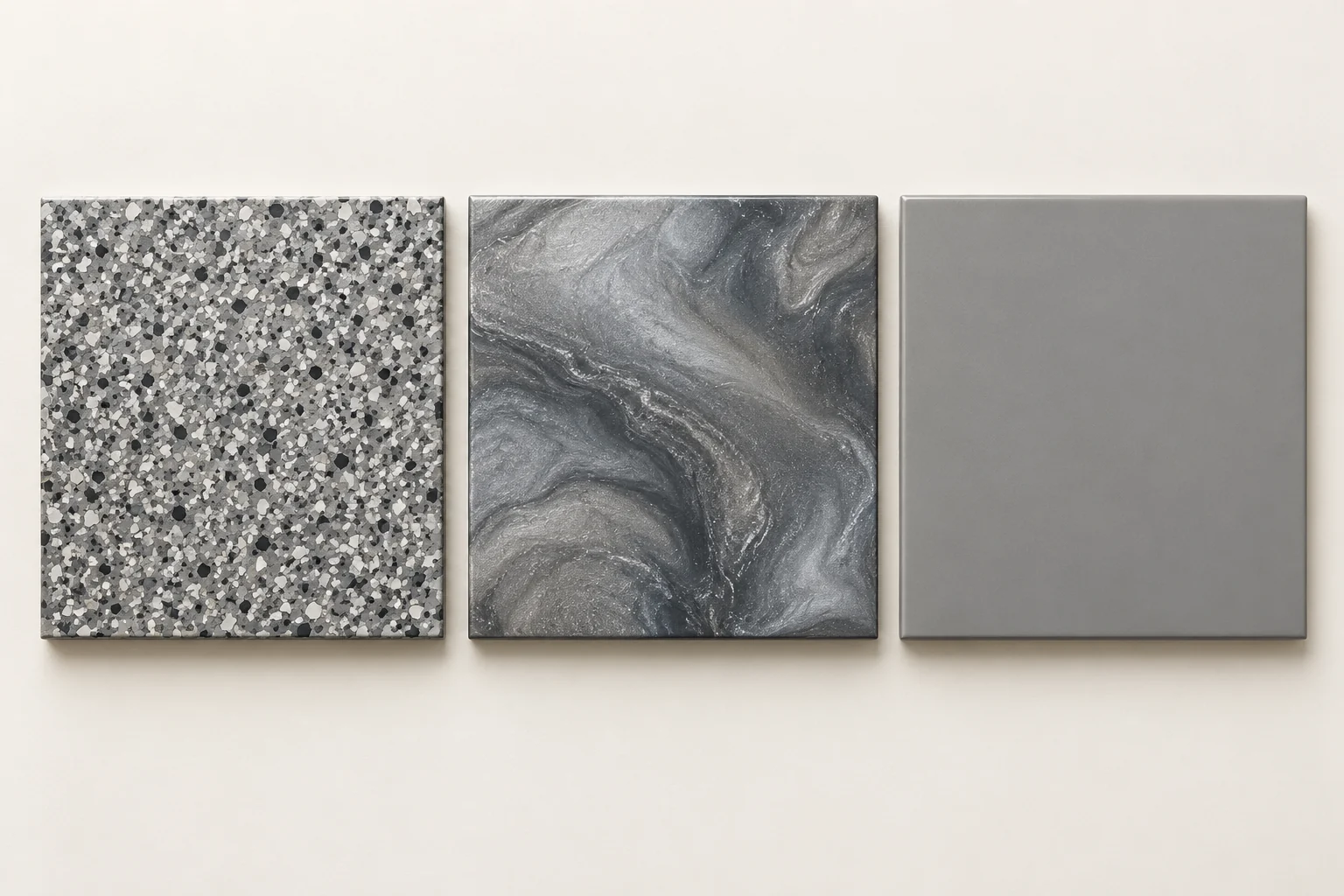
The blend sets the overall color direction. Individual flake size and distribution change how fine or busy the pattern appears. Coverage changes how much of the underlying color remains visible. These choices should be represented clearly in the sample or specification.
A small close-up can exaggerate details that look quieter across a full garage. View the sample from standing distance as well as close to the surface. Consider it beside the walls, cabinets and doors rather than choosing solely from a digital color chart.
Ask what level of coverage is included in the quote. A scattered decorative treatment and a fuller broadcast can look very different. Neither should be described vaguely enough that the customer and installer picture different floors.
Also think about visibility. A strongly patterned floor may disguise dust, but it can make small dropped parts harder to find. If your garage doubles as a workbench area, that tradeoff matters more than whether the blend is fashionable.
Balance flake floor texture, grip and cleaning
Flakes do not automatically make the completed surface slip resistant. The final texture depends on the system and how it is finished. Discuss water exposure, footwear, cleaning and the way people move through the space.
A garage near an exterior door may receive wet tires and shoes. A shop may need a surface that staff can clean efficiently while managing occasional spills. These are different briefs, even if the same color blend appeals to both owners.
More texture is not always an improvement. It may change how comfortable the floor feels under bare feet or when kneeling, and it can affect cleaning effort. Ask for a representative finished sample where practical, rather than judging grip from loose flakes.
Keep traction expectations specific. Explain where water appears and whether it comes from normal use, tracked-in rain or a separate entry problem. A textured finish cannot correct drainage or make every wet condition safe.
Choose a compatible topcoat for epoxy flake flooring
Preparation establishes the surface the system relies on. Existing coatings, contamination, weak concrete and moisture conditions need assessment before the decorative stage. Repairs and joint treatment should be included in the agreed scope.
The proposed layers should be named and compatible. Some systems combine an epoxy base with a compatible polyaspartic topcoat. Polyaspartic is a different chemistry, not a type of epoxy. Its use should be justified by the system specification, rather than treated as a substitute word for quality.
The protective finish also affects appearance, cleaning and exposure resistance. Ask what the selected system is designed to handle and which limitations apply. A clear coating does not mean invisible protection against every scratch, chemical or source of sunlight.
If a garage threshold receives direct light, discuss that exposure explicitly. Do the same for cleaning agents, vehicle fluids or other substances likely to reach the floor. Product suitability should follow the actual conditions.
Compare flake samples and the written installation scope
Use the selection stage to settle both appearance and scope:
| Item | Decision to record |
|---|---|
| Blend | Approved color combination and representative sample |
| Coverage | How much decorative coverage is included |
| Surface | Agreed texture and protective finish |
| Boundaries | Treatment of steps, edges, stem walls and adjoining floors |
| Preparation | Existing coating removal, repairs and substrate assessment |
| Timing | Separate instructions for walking, belongings and vehicles |
Keep the sample reference with the proposal. If the selection changes, confirm whether the change affects products, price or timing. This avoids a familiar problem: a color name is remembered, but nobody can establish which version was agreed.
For occupied properties, plan where stored items will go and how access will be controlled. The finish needs protection during curing, even if it already looks complete. Moving cabinets back early is not a useful test of readiness.
Epoxy flake flooring questions
Can flake hide an uneven or damaged slab?
The pattern may make some visual differences less obvious, but defects still need assessment. It cannot replace repairs, correct every level change or make a weak substrate suitable for coating.
Can an epoxy flake floor be hosed down?
That depends on the installed system, water-management arrangements and the surrounding space. Follow the care instructions and consider where the water will go. A coating alone does not turn a garage into a designed wash-down room.
Is every flake floor the same apart from color?
No. Preparation, base layers, decorative coverage, topcoat and texture can differ. Compare the complete proposal. Two similar photographs can represent different work beneath the visible surface.
Request a Clermont epoxy flake flooring estimate
Send the location, approximate area, current surface and intended use. Mention the blend or appearance you prefer, any water exposure and the activities the floor needs to support.
Request an estimate. You can also review our service areas and floor preparation guide before choosing a system.